
Employers with Timekeeping Rounding Policies May Want to Rethink Them
February 21, 2024

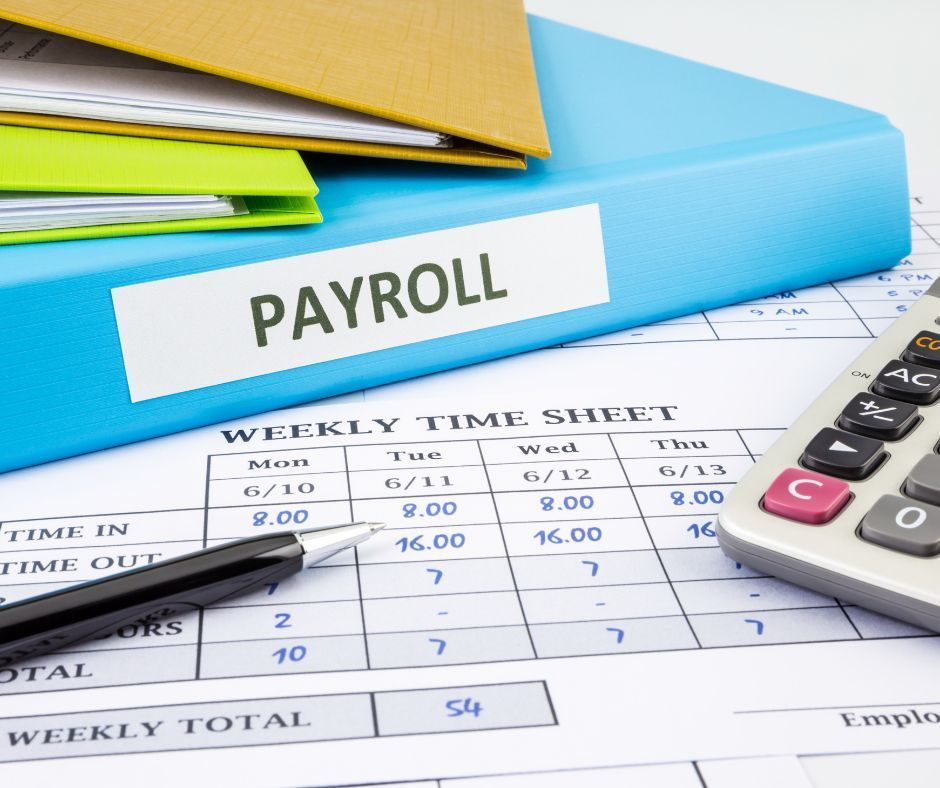
A recent case from the Eighth Federal Circuit Court raises an issue about a longstanding common practice of some employers use of rounding policies when tracking hours worked by employees. In the case, the employer used an automated timekeeping system which rounded to the next quarter hour when an employee clocked in within 6 minutes of the scheduled shift start time, or out within 6 minutes of the scheduled end time. For example, an employee who clocked in at 7:55 for a scheduled 8:00 shift would not be paid for the 5 minutes before 8:00, because the clock would round up to 8:00. An employee clocking out at 3:55 for a scheduled 4:00 end time would be paid for the 5 minutes of unworked time before 4:00, because the clock would round to 4:00.


The Fair Labor Standards Act, “FLSA,” is the federal law governing the payment of wages to employees. When it was enacted, 86 years ago, employers obviously did not have the technology available today to track employee work hours. Back then, it would have been very complex to calculate each employee’s hours worked on a minute-by-minute basis. Accordingly, rounding polices were common, and are specifically allowed by FLSA regulations. However, the regulations state that such polices will “presumably average out over time so that employees are fully compensated.”


Unfortunately for the employer in the recent case, experts determined that the rounding policy resulted in lost time for two-thirds of the employees over all of the 2-6 year periods examined, and they lost more time than the one-third of employees who benefited from the policy.


The court found that the rounding policy was not in compliance with the FLSA regulation because, rather than “averaging out” so that employees were fully compensated, it resulted in a clear trend of under compensation for the employees.


The court specifically noted that automated, electronic timing and accounting systems (such as the one involved in this case) record exact punch in and out times, and there therefore are no administrative hassles with capturing an employee’s exact work time. “This is not like the old days of punch cards and hand arithmetic.”


So, employers using automated systems and a rounding policy to pay hourly employees should probably give a great deal of thought to retiring the rounding policy and paying actual clock in and out times to avoid claims by employees that they have not been paid for all time worked. The employees in the case discussed herein are looking for over $2,000,000 in damages, plus attorney fees.


Our HR experts assist our clients with all wage and hour issues such as this.

Recent Posts

January 15, 2026
A recent Opinion Letter from the Department of Labor, “DOL,” serves as a good reminder that incentive bonus payment usually must be included in an employee’s regular rate used to calculate overtime. The Opinion Letter dealt with an employer in the waste industry that paid drivers a bonus every pay period if certain safety and performance criteria (punctuality, attendance, and consistency in completing daily safety tasks) were met. Not surprisingly, the DOL found that the bonus amounts should be included in the regular rate of pay for overtime calculation purposes, because the payments were incentives and Discretionary Bonuses. Discretionary bonuses may be excluded from the regular rate of pay if: (1) the fact and amount of the payment are determined at the SOLE Discretion of the employer; (2) with the determination being made at or near the time of the period when the work was performed; and the payment must not be made pursuant to any prior contract, agreement, or promise causing the employee to expect such payments regularly. The payments in this case were made pursuant to a predetermined plan to incentivize work performance. A true Discretionary bonus which can be excluded from overtime is quite unusual. Accordingly, most bonus payments must be included in overtime calculations.
October 28, 2025
As employers will recall, a federal court struck down the Fair Trade Commission’s (FTC) proposed ban on employee non-compete agreements over a year ago. The FTC has since abandoned its effort to enforce a rule completely banning such agreements. However, in September, the FTC surprised some by announcing that it intends to regulate the use of employee non-competes on a case-by-case basis. It seems that the FTC will consider whether the restrictions are “reasonable” by determining whether they are no greater than is necessary to protect the employer’s legitimate interests, balancing those interests against the hardship to the employee and public. Some factors that are likely to be considered are: The size of the company, both in terms of employees and business; Whether the employer requires non-competes of all employees, or only those with job duties that might justify their use to protect the employer’s interests; The scope of the geographic and time limitations contained in the non-competes. This “reasonableness” determination is very similar to the analysis that many state courts use in determining whether to enforce a non-compete. The FTC has announced its intention to put particular focus on employers in the healthcare space. However, all employers utilizing non-compete agreements should review the restrictions contained therein in an effort to determine that they appear reasonable under the above criteria.
August 20, 2025
A lawsuit was filed in 2023 in federal court in CA by a man alleging that he applied for many jobs at companies that utilize Workday’s platform, and that he was rejected for all, with many rejection emails coming within an hour of his application
July 8, 2025
The federal law enacted last week provides some tax relief for employees who work overtime, and for those who receive tips. A summary is set forth below: Overtime Deduction An employee must receive OT pay as defined by the Fair Labor Standards Act (FLSA) (pay for hours worked beyond 40 in a workweek at a premium rate), and the deduction only applies to the premium portion of OT pay (the amount above the regular hourly rate). The deduction applies only to overtime compensation that is “required” under the FLSA. The deduction does not apply to overtime premiums that are not “required” by the FLSA, but instead are paid pursuant to contract (including a collective bargaining agreement), company policy, or because they are required under state law only. This is an above-the-line deduction, with the maximum deduction being $12,500 per year (up to $25,000 if married filing jointly). To be eligible for the full deduction, employees must earn $150,000 or less. Employers must include the total amount of qualified overtime compensation as a separate line item on the Form W-2. This will require employers to keep a distinct record of the overtime premium compensation that is both (a) required under the FLSA and (b) in excess of the regular rate. Tips Deduction To qualify for the deduction, the tips must be received by an individual engaged in an occupation that customarily and regularly received tips on or before Dec. 31, 2024, such as servers, bartenders, hotel staff, hairstylists, etc. To be considered a “qualified tip,” the amount must: (a) be paid voluntarily without any consequence in the event of nonpayment; (b) not be the subject of negotiation; and (c) be determined by the payor. Thus, for example, a mandatory service charge imposed by the employer for a banquet will not qualify for the deduction, and neither will a required gratuity that a restaurant adds automatically to a bill for large parties. Failing to make this distinction may lead employees to claim deductions to which they are not entitled. This is also an above-the-line deduction, with a cap of $25,000 per year. To be eligible for the full deduction, employees must earn $150,000 or less. The act requires employers to include on Form W-2 the total amount of cash tips reported by the employee, as well as the employee’s qualifying occupation. For 2025, the act authorizes the reporting party to “approximate” the amount designated as cash tips pursuant to a “reasonable method” to be specified in a forthcoming regulation by the Treasury secretary.
February 6, 2025
The FMLA contains specific provisions allowing eligible employees to take leave “to care for the employee's spouse, son, daughter, or parent with a serious health condition.” In December, the 6th Circuit Court of Appeals, which is the Federal Appellate Court for the above states, issued an opinion finding that an employee might be entitled to take FMLA leave to care for her sick sister. The language of the FMLA is crystal clear as to family members for which an employee may take FMLA leave to care for. Notwithstanding that, the court found that the in loco parentis (in the place of a parent) language in the FMLA’s definition of ‘Parent” and “Son or Daughter” showed that “Congress sought to protect parental relationships, whether biological, legal, or their functional equivalents.” So, the court sent the case back to the lower court to determine whether the employee in question had an “in loco parentis” relationship with her sister. If so, the employee would be entitled to FMLA leave to care for the sister. This nonsensical interpretation of the FMLA by court leaves employers in the above states with great uncertainty as to what to do if an employee requests FMLA leave to care for a sibling. Under the court’s skewed reasoning, the employer would have to determine whether an employee requesting such leave actually stood in loco parentis with the sibling. An employer facing such a request should consult with an HR or legal professional.